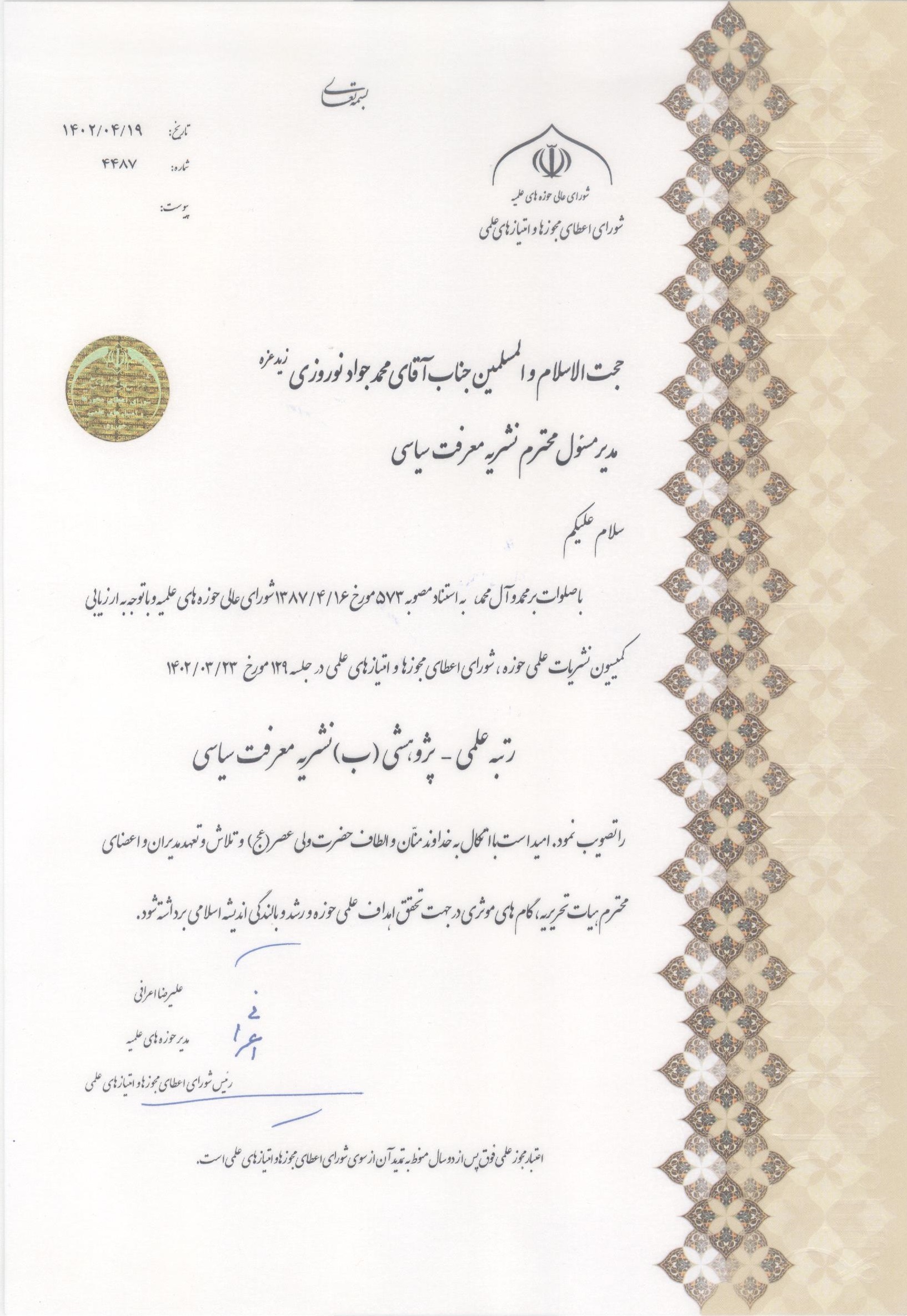
The Political Structure of Religious Democracy in Multicultural Societies
Article Type:
Research
Writers:
Manochehr Mohammadi / Associate Professor, Department of Political Sciences, University of Tehran / prof.mohammadi@yahoo.com
Mohsen Rezvani / / Associate Professor, Department of Political Sciences, the Imam Khomeini Institute for Education and Research / rezvani@iki.ac.ir
/ / Associate Professor, Department of Political Sciences, the Imam Khomeini Institute for Education and Research / rezvani@iki.ac.ir✍️ Hafizollah / / MA in Political Sciences, the Imam Khomeini Institute for Education and Research / moballeghh@yahoo.com
Abstract:
The current version of majority-based religious democracy is not appropriate for multicultural societies; rather, a special version of religious democracy is needed to provide justice and security in these societies. The main research question concerns the political structure appropriate for such societies. Using descriptive- prescriptive method and based on the principles and main components of religious democracy such as social justice, political pluralism, popular acceptance, the rule of religious law, and supervision over power, this study offers a specific structure for these communities in four territorial, legislative, administrative and judicial areas. The results show that the federal system with a bipolar administrative structure consisting of the democratically-elected president and the prime minister elected by the parliament, the proportional distribution of power and benefits at different levels, the supervision of a religious institution over the legislative process and judicial structure based on judicial independence in personal status, the use of independent courts, the strengthening of human rights institutions, and the application of accepted human rights and Islamic human rights laws are the most appropriate structures in multicultural societies.
چکیده و کلیدواژه فارسی (Persian)
Title :ساختار سیاسی مردمسالاری دینی در جوامع چندفرهنگی
Abstract:
نسخۀ رایج مردم سالاری دینی مبتنی بر رأی اکثریت، مناسب جوامع چندفرهنگی نیست؛ بلکه به نسخۀ خاصی از مردم سالاری دینی نیاز است تا بتواند عدالت و امنیت در این جوامع را فراهم کند. پرسش این است که چه ساختار سیاسی ای مناسب چنین جوامعی است؟ تحقیق پیش رو با استفاده از روش توصیفی و تجویزی و بر مبنای اصول و مؤلفه های اصلی مردم سالاری دینی، مانند عدالت اجتماعی، کثرت گرایی سیاسی، مقبولیت مردمی، حاکمیت قوانین دینی، و نظارت بر قدرت، ساختار خاصی را در چهار حوزۀ سرزمینی، تقنینی، اداری و قضایی برای این جوامع پیشنهاد می کند. نتایج تحقیق نشان می دهد که نظام فدرال با ساختار اداری دورکنی مرکب از رئیس جمهور منتخب مردم و نخست وزیر منتخب پارلمان و توزیع تناسبی قدرت و مزایا در سطوح مختلف، همراه با ساختار تک مجلسی مبتنی بر نظام انتخاباتی تناسبی که در آن قوانین دینی حاکم باشد، همراه با نظارت یک نهاد دینی بر روند قانون گذاری و ساختار قضایی مبتنی بر استقلال قضایی در احوال شخصیه، استفاده از دادگاه های مستقل، تقویت نهادهای حقوق بشری و استفاده از قوانین پذیرفته شدهی حقوق بشر و حقوق بشر اسلامی، مناسب ترین ساختار در جوامع چندفرهنگی است.
References:
- نهجالبلاغه، 1379، ترجمه محمد دشتی، قم، مشهور.
- ابنسینا، حسین بن عبدالله، 1404ق، الشفاء؛ الالهیات (1)، تحقیق الاب قنواتی و سعید زاید، قم، منشورات مکتبۀ آیۀالله العظمی المرعشی النجفی.
- بیات، عبدالرسول و دیگران، 1386، فرهنگ واژهها، چ سوم، قم، مؤسسه اندیشه و فرهنگ دینی.
- جوادی آملی، عبدالله، 1383، تسنیم، ج6، قم، اسراء.
- خوبروی پاک، محمدرضا، 1377، نقدی بر فدرالیسم، تهران، شیرازه.
- دانش، سرور، 1389، حقوق اساسی افغانستان، کابل، دانشگاه ابنسینا.
- رالز، جان، 1387، نظریۀ عدالت، ترجمه محمدکمال سروریان و مرتضی بحرانی، تهران، پژوهشکدۀ مطالعات فرهنگی و اجتماعی.
- رفیعی، حسنرضا، 1380، امور انتظامی در نظام حسبه اسلامی، تهران، دانشگاه علوم انتظامی.
- روسو، ژان ژاک، 1369، قرارداد اجتماعی یا اصول حقوق اساسی، ترجمه منوچهر کیا، تهران، گنجینه.
- سید باقری، سیدکاظم، 1388، فقه سیاسی شیعه، سازوکارهای تحول در دوران معاصر، تهران، سازمان انتشارات پژوهشگاه فرهنگ و اندیشه.
- ـــــ ، 1393، عدالت سیاسی، تهران، پژوهشگاه فرهنگ و اندیشۀ اسلامی.
- سیسک، تیموثی.دی، 1379، تقسیم قدرت و میانجیگری بینالمللی در منازعات قومی، تهران، پژوهشکده مطالعات راهبردی.
- شباننیا، قاسم، 1393، حقوق بشر در پرتو حکومت اسلامی، قم، مؤسسه آموزشی و پژوهشی امام خمینی.
- شومپیتر، جوزف، 1375، کاپیتالیسم، سوسیالیسم و دموکراسی، ترجمه حسن منصور، چ دوم، تهران، مرکز.
- صرامی، سیفالله، 1377، حسبه یک نهاد حکومتی، قم، دفتر تبلیغات اسلامی.
- طباطبایی، محمدحسین، 1363، ترجمه تفسیر المیزان، ترجمه محمدباقر موسوی همدانی، ج8، چ پنجم، قم، اسلامی.
- طوسی، خواجه نصیرالدین، 1387، اخلاق ناصری، تصحیح مجتبی مینوی و علیرضا حیدری، چ ششم، تهران، خوارزمی.
- عمیدزنجانی، عباسعلی، 1388، «عدالت توافقی در اسلام»، در: مجموعه مقالات درآمدی بر نظام سیاسی عدالت در اسلام، بهکوشش علیاکبر علیخانی، تهران، پژوهشکدۀ مطالعات فرهنگی و اجتماعی.
- فابر، سسیل، 1390، عدالت در جهان متحول، ترجمه رستم فلاح، تهران، دانشگاه امام صادق.
- فارابی، ابونصرمحمد، 1361، اندیشههای اهل مدینۀ فاضله، ترجمه سید جعفر سجادی، تهران، کتابخانه طهوری.
- ـــــ ، 1382، فصول منتزعه فارابی، ترجمه حسن ملکشاهی، تهران، سروش.
- قاضی، ابوالفضل، 1380، حقوق اساسی و نهادهای سیاسی، چ هفتم، تهران، دانشگاه تهران.
- قمی، محمد بن على بن حسين بن بابويه، 1413ق، من لايحضره الفقيه، ج4، چ سوم، بیجا، اسلامی.
- کلینی، محمد بن یعقوب، 1407ق، الکافی، ج1، چ چهارم، تهران، دارالکتب الاسلامیه.
- کمیلیکا، ویل، 1395، شهروندی چندفرهنگی، ترجمه ابراهیم اسکافی، تهران، شیرازۀ کتابما.
- کوهن، کارل، 1373، دموکراسی، ترجمه فریبرز مجیدی، تهران، خوارزمی.
- لیجفارت، آرند، 1383، «دموکراسی چندقومی»، در: دایرۀالمعارف دموکراسی، زیرنظر سیمون مارتین لیپسِت، ترجمه کامران فانی و نورالله مرادی، تهران، وزارت امور خارجه.
- ماوردی، ابو الحسن علی بن محمد بن حبیب بغدادي، بیتا، الاحکام السلطانیة والولایات الدینیۀ، قم، بيتا، دفتر تبلیغات اسلامی حوزه علمیه قم.
- مجلسی، محمدباقر، 1404ق، بحارالأنوار، ج73، باب 67، بیروت، مؤسسة الوفاء.
- مصباح یزدی، محمدتقی، 1376، «پلورالیسم»، معرفت، ش22، ص4-9.
- ـــــ ، 1385، پرسشها و پاسخها، ج1 و2، قم، مؤسسۀ آموزشی و پژوهشی امام خمینی.
- ـــــ ، 1386، نگاهى گذرا به نظريه ولايت فقيه، چ دوازدهم، قم، مؤسسۀ آموزشی و پژوهشی امام خمینی.
- ـــــ ، 1387، کاوشها و چالشها، ج2، قم، مؤسسۀ آموزشی و پژوهشی امام خمینی.
- ـــــ و محمدجواد نوروزی، 1387، مردمسالاری دینی و نظریۀ ولایت فقیه، قم، مؤسسۀ آموزشی و پژوهشی امام خمینی.
- ـــــ ، 1388، نظریۀ سیاسی اسلام، چ دوم، قم، مؤسسۀ آموزشی و پژوهشی امام خمینی.
- مکارم شیرازی، ناصر، 1411ق، القواعد الفقهیه، ج1، قم، مدرسه امیرالمؤمنین.
- موسوي خمینی، سيد روحالله، 1423ق، ولایت فقیه، چ دوازدهم، تهران، مؤسسه تنظیم و نشر آثار امام خمینی.
- موسیزاده، ابراهیم، 1395، حقوق بشر در اسلام، تهران، خرسندی.
- هانتینگتون، ساموئل، 1373، موج سوم دموکراسی در پایان سدۀ بیستم، ترجمه احمد شهسا، تهران، روزنه.
Copyright © 2020 The Author(s). This article is published under the Creative Commons Attribution-NonCommercial 4.0 International License.
Cite this article:
RIS
Mendeley
BibTeX
APA
MLA
HARVARD
VANCOUVER
Mohammadi, Manochehr, Rezvani, Mohsen, , Hafizollah. (2020) The Political Structure of Religious Democracy in Multicultural Societies. Ma`rifat-e Siasi, 12(1), 65-83
Manochehr Mohammadi; Mohsen Rezvani; Hafizollah ."The Political Structure of Religious Democracy in Multicultural Societies". Ma`rifat-e Siasi, 12, 1, 2020, 65-83
Mohammadi, M, Rezvani, M, , H.(2020) 'The Political Structure of Religious Democracy in Multicultural Societies', Ma`rifat-e Siasi, 12(1), pp. 65-83