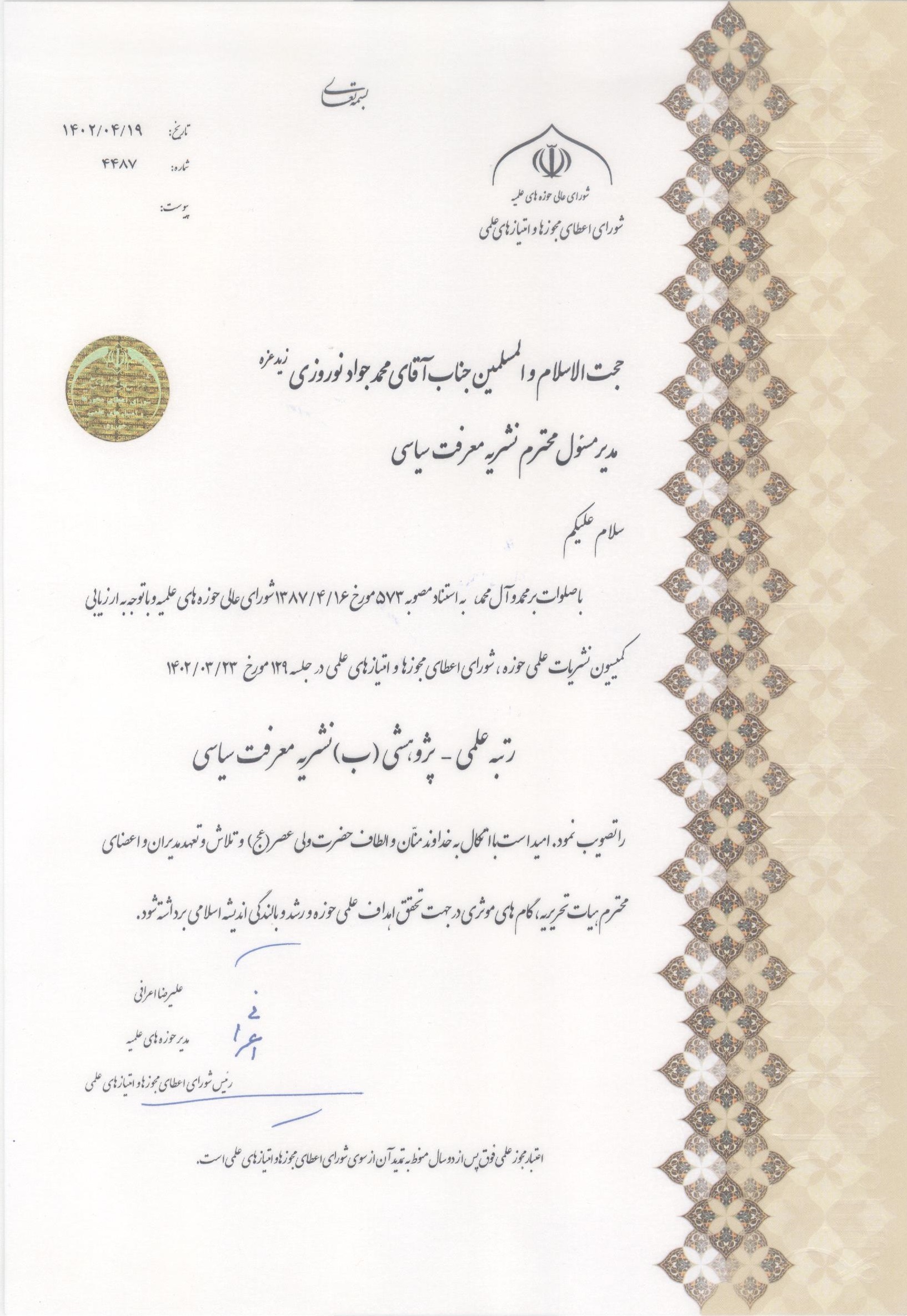
Ma`rifat-e Siasi, Volume 16, Issue 2, No 32, Year 2025, Pages 103-123
An Analysis of Crime Prevention with a Geographical Approach Based on Critical Criminology (Case Study of Chaharmahal and Bakhtiari Province)
Article Type:
Research
Writers:
✍️ Rasoul Hakami / PhD Student of Political Science, Imam Khomeini Educational and Research Institute / Hakami68@yahoo.com
/ PhD Student of Political Science, Imam Khomeini Educational and Research Institute / Hakami68@yahoo.comGhasem Shabanniya Roknabadi / Associate Professor, Political Science Department, Imam Khomeini Educational and Research Institute / shabanniya@iki.ac.ir
/ Associate Professor, Political Science Department, Imam Khomeini Educational and Research Institute / shabanniya@iki.ac.irMojtaba Abdkhodaei / Associate Professor, International Relations, Faculty of Law and Political Science, Allameh Tabatabai University / abdcourse@gmail.com
Registering DOI...⏳
Abstract:
Securitization as a speech act refers to the process through which an issue (security referent) is presented by a competent authority (securitizing actor) as an existential threat to the survival and values of a security object (audience) and necessitates emergency measures. Although this concept is one of the specialized theories in security studies, it seems necessary to pursue it due to the lack of analysis from the perspective of theoretical coherence. Therefore, the aim of this research is to answer the question: Does securitization as a speech act within the Copenhagen School framework possess sufficient theoretical coherence to be used as a comprehensive analytical framework in security studies? What appears, using a descriptive-analytical method and interpretation of the Copenhagen School's documentary propositions, is that ambiguity in precisely defining the role of the securitizing actor and the audience, conflict among different components, and contradiction in some guidelines reduce the practical application of this model in analyzing complex security issues. Thus, although the Copenhagen School has been successful in presenting an innovative framework for analyzing securitization, it requires revision to become a comprehensive and effective model.
چکیده و کلیدواژه فارسی (Persian)
Title :امنیتیسازی بهمثابة کنش گفتاری: تحلیل و ارزیابی از منظر انسجام نظری
Abstract:
امنیتیسازی بهمثابة کنش گفتاری بهمعنای فرایندی است که طی آن، یک موضوع (موضوع امنیت) از سوی مرجع صلاحیتدار (مرجع امنیتیسازی) بهعنوان تهدیدی وجودی برای بقا و ارزشهای امنیتی معرفی میشود (مخاطب) و مستلزم واکنشهای فوقالعاده است. این مفهوم، اگرچه یکی از نظریههای تخصصی مطالعات امنیت است؛ ولی بهعلت عدم تحلیل از منظر انسجام نظری، ضروری مینماید که آن را پیگیری کنیم. ازاینرو هدف از نگارش این پژوهش پاسخ به این پرسش است که آیا امنیتیسازی بهمثابة کنش گفتاری در چهارچوب مکتب کپنهاک از انسجام نظری کافی برخوردار است تا بهعنوان یک چهارچوب تحلیلی جامع در مطالعات امنیتی بهکار گرفته شود؟ آنچه با استفاده از روش توصیفی ـ تحلیلی و تفسیر گزارههای اسنادی مکتب کپنهاک بهنظر میرسد، این است که بهعلت ابهام در تعریف دقیق نقش مرجع امنیتیسازی و مخاطب، تعارض میان ارکان مختلف و تناقض در برخی از رهنمودها کاربرد عملی این الگو را در تحلیل مسائل پیچیدة امنیتی کاهش میدهد. بنابراین اگرچه مکتب کپنهاک در ارائة یک چهارچوب نوآورانه برای تحلیل امنیتیسازی موفق بوده؛ اما برای تبدیل شدن به یک الگوی جامع و کارآمد، نیازمند بازنگری است.
References:
- استیو، دان. آر. (۱۳۸۴). فلسفة زبان دینی. ترجمة ابوالفضل ساجدی. قم: ادیان.
- بوزان، باری، ویور، اُلی و دو ویلد، پاپ (۱۳۹۲). چارچوبی تازه برای تحلیل امنیت. ترجمة علیرضا طیب. تهران: پژوهشکدة مطالعات راهبردی.
- جوادی آملی، عبدالله (۱۳۸۹). ادب فنای مقربان. قم: اسراء.
- دهقانی فیروزآبادی، سیدجلال (۱۳۹۳). فرانظریة اسلامی روابط بینالملل. تهران: دانشگاه علامه طباطبائی.
- دهقانی فیروزآبادی، سیدجلال (۱۳۹۵). اصول و مبانی روابط بینالملل (۲). تهران: سمت.
- زارعزاده، رسول (۱۴۰۲). امنیتیسازی در فضای پساکپنهاگی. آفاق امنیت، 16(60)، 36ـ107.
- زارعزاده، رسول (۱۳۹۶). نگاه کپنهاگی به امنیتیسازی: مبانی و چالشها. آفاق امنیت، 36(10)، 90ـ120.
- ساجدی، ابوالفضل (۱۳۸۱). نظریة کنش گفتاری جان آستین و فهم زبان قرآن. قبسات، 25(7)، 30ـ122.
- سرل، جان آر. (۱۳۸۷). افعال گفتاری جستاری در فلسفة زیان. ترجمه و مقدمۀ محمدعلی عبداللهی. قم: پژوهشگاه علوم و فرهنگ اسلامی.
- صدر، سیدمحمدباقر (1996). بحوث فی علم الأصول. قم: مؤسسة دائرةالمعارف الفقه الإسلامی.
- صفوی، کورش (۱۳۹۲). معنیشناسی کاربردی. تهران: همشهری.
- عبداللهخانی، علی (۱۳۸۵). بررسی و نقد نظریة امنیتی ساختن. مطالعات راهبردی، 33(9)، 491ـ512.
- عبداللهی، محمدعلی (2005). نظریة افعال گفتاری. پژوهشهای فلسفی ـ کلامی، 6(24)، 91ـ119.
- علوی، سیدمحمدعلی و دهقانی فیروزآبادی سیدجلال (۱۳۹۵). روند امنیتیسازی فعالیت هستهای جمهوری اسلامی ایران توسط لابی طرفدار اسرائیل در امریکا از منظر مکتب کپنهاگ. پژوهشهای راهبردی سیاست، 17(5)، 39ـ58.
- قائمینیا، علیرضا (۱۳۹۹). معناشناسی ۱. قم: پژوهشگاه حوزه و دانشگاه.
- قرشی، سیدیوسف (۱۳۹۳). امنیتی شدن و سیاست خارجی جمهوری اسلامی ایران. تهران: پژوهشکدة مطالعات راهبردی.
- ونت، الکساندر (۱۳۹۲). نظریة اجتماعی سیاست بینالملل. ترجمة حمیرا مشیرزاده. تهران: وزارت امور خارجه.
- ویور، اِلی (۱۳۸۳). امنیتی کردن و غیرامنیتی کردن». در: امنیت ملی و مدیریت بحران. ترجمة مرادعلی صدوقی. تهران: نگارستان اندیشه.
- هابز، تامس (1380). لویاتان. ترجمة حسین بشیریه. تهران: نشر نی.
References:
- Austin, John Langshaw (1975). How to Do Things with Words. Oxford: Oxford university press.
- Ayoob, Mohammed (1983). Security in the Third World: The Worm about to Turn?. International Affairs, 60(1), 41-51. /https://doi.org/10.2307/2618929.
- Balzacq, Thierry (2011A). A Theory of Securitization: Origins, Core Assumptions, and Variants. In: Securitization Theory. 15-44. New York: Routledge.
- Balzacq Thierry (2011B). Securitization Theory. In: Theory of Securitization: Origins, Core Assumptions, and Variants. New York: Routledge.
- BUZAN, BARRY and OLE WÆVER (2009). Macrosecuritisation and Security Constellations: Reconsidering Scale in Securitisation Theory. Review of International Studies, 35(2), 253-276. https://doi.org/10.1017/S0260210509008511.
- Buzan, Barry, Ole Wæver, and Jaap de Wilde (1998). Security: A New Framework for Analysis. United States of America: Lynne Rienner Pub.
- Dyzenhaus, D. (2010). The “Organic Law” of Ex Parte Milligan. In A. Sarat (Ed.), Sovereignty, Emergency, Legality (pp. 16–57). chapter, Cambridge: Cambridge University Press.
- Floyd, Rita (2010). Security and the Environment: Securitisation Theory and US Environmental Security Policy. Cambridge: Cambridge University Press.
- Floyd, Rita (2016). Extraordinary or Ordinary Emergency Measures: What, and Who, Defines the ‘Success’ of Securitization?. Cambridge Review of International Affairs, 29(2), 677-694.
- Floyd, Rita (2021). Securitisation and the Function of Functional Actors. Critical Studies on Security, 9(2), 81-97.
- Hofstede, Geert (1991). Cultures and Organizations: Software of the Mind. London/New York: McGraw-Hill.
- Huysmans, Jef (2011). What’s in an Act? On Security Speech Acts and Little Security Nothings. Security Dialogue, 42(4-5), 371-383.
- Jackson, Nicole J (2006). International Organizations, Security Dichotomies and the Trafficking of Persons and Narcotics in Post-Soviet Central Asia: A Critique of the Securitization Framework. Security Dialogue, 37(3), 299-317.
- Léonard, Sarah and Christian Kaunert (2010). Reconceptualizing the Audience in Securitization Theory. In: Securitization Theory. 71-90. London: Routledge.
- Vuori, Juha A. (2008). Illocutionary Logic and Strands of Securitization: Applying the Theory of Securitization to the Study of Non-Democratic Political Orders. European Journal of International Relations, 14(1), 65-99. https://doi.org/10.1177/1354066107087767.
- Wæver, Ole (1993). Securitization and Desecuritization. Copenhagen: Centre for Peace and Conflict Research Copenhagen.
- Wæver, Ole (1995). Securitization and Desecuritization. In: On Security. New York: Columbia University Press.
- Wæver, Ole (2003). Securitisation: Taking Stock of a Research Programme in Security Studies. Unpublished Draft, 1(36).
- Wæver, Ole (n. d.). Security, the Speech Act’Working Paper. Copenhagen: Centre for Peace and Conflict Research.
- Michael C. Williams, Words, Images, Enemies: Securitization and International Politics, International Studies Quarterly, Volume 47, Issue 4, December 2003, P. 511–531, https://doi.org/10.1046/j.0020-8833.2003.00277.x.
Copyright © 2025 The Author(s). This article is published under the Creative Commons Attribution-NonCommercial 4.0 International License.
Cite this article:
RIS
Mendeley
BibTeX
APA
MLA
HARVARD
VANCOUVER
Hakami, Rasoul, Shabanniya Roknabadi, Ghasem, Abdkhodaei, Mojtaba. (2025) An Analysis of Crime Prevention with a Geographical Approach Based on Critical Criminology (Case Study of Chaharmahal and Bakhtiari Province). Ma`rifat-e Siasi, 16(2), 103-123 https://doi.org/10.22034/siyasi.2025.5001382.
Rasoul Hakami; Ghasem Shabanniya Roknabadi; Mojtaba Abdkhodaei."An Analysis of Crime Prevention with a Geographical Approach Based on Critical Criminology (Case Study of Chaharmahal and Bakhtiari Province)". Ma`rifat-e Siasi, 16, 2, 2025, 103-123
Hakami, R, Shabanniya Roknabadi, G, Abdkhodaei, M.(2025) 'An Analysis of Crime Prevention with a Geographical Approach Based on Critical Criminology (Case Study of Chaharmahal and Bakhtiari Province)', Ma`rifat-e Siasi, 16(2), pp. 103-123