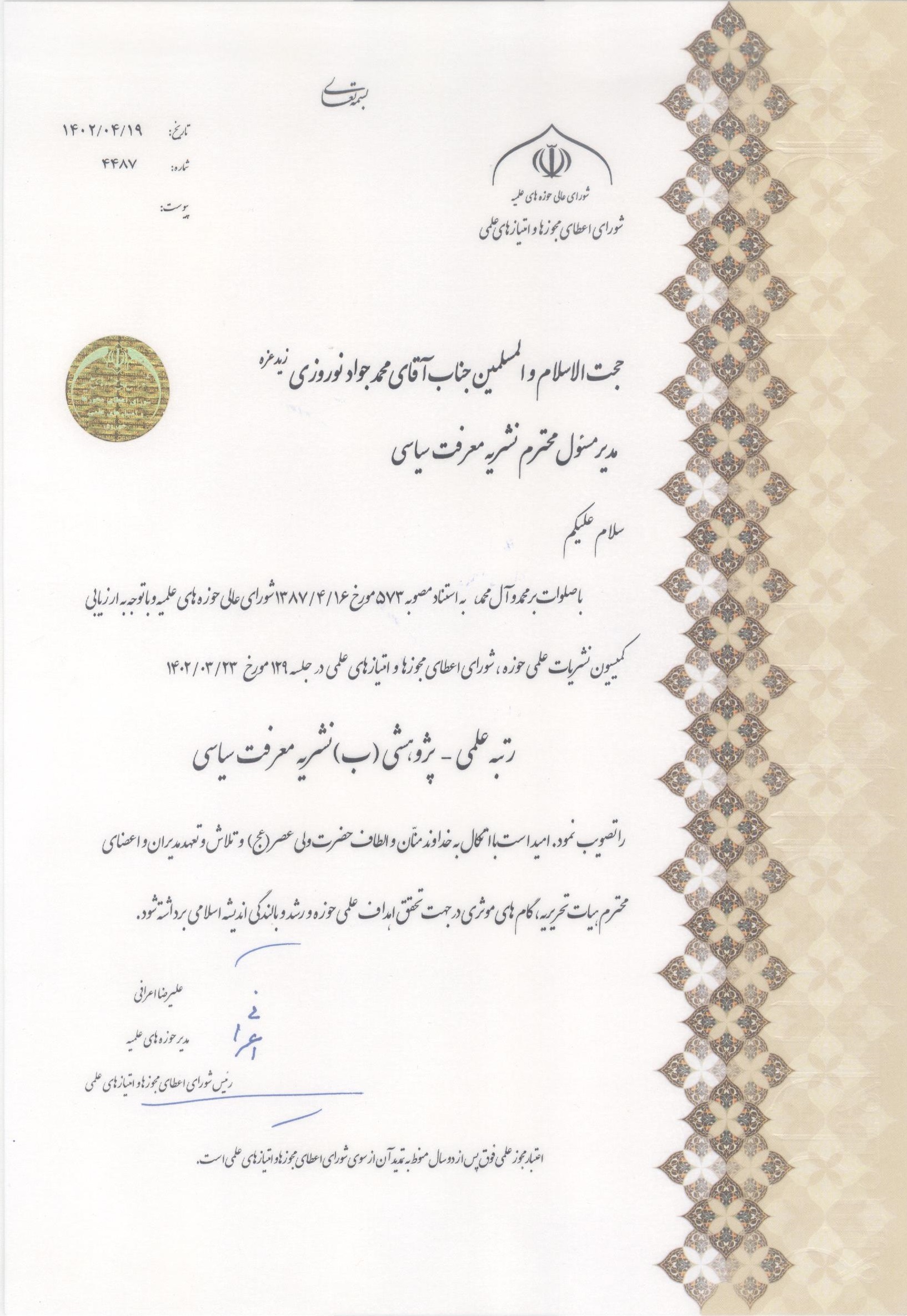
Ma`rifat-e Siasi, Volume 17, Issue 2, No 34, Year 2026, Pages 151-169
Religious Politics in the Thought of Augustine and Imam Khomeini: A Comparison of the Sacred Separatist Model and the Unitary Monotheistic Model
Article Type:
Research
Writers:
✍️ Hasan Malekinejad / Ph.D. in Theology and Mysticism of Imam Khomeini’s Thought, University of Religions and Denominations, Qom, Iran / hasanmaleki51@gmail.com
/ Ph.D. in Theology and Mysticism of Imam Khomeini’s Thought, University of Religions and Denominations, Qom, Iran / hasanmaleki51@gmail.comQader Hafez / Assistant Professor, Department of Islamic Mysticism, University of Religions and Denominations, Qom, Iran / azali.1478@gmail.com
Behroz Haddadi / Associate Professor, University of Religions and Denominations, Department of Abrahamic Religions, Qom, Iran / Behrooz.haddadi@gmail.com
Registering DOI...⏳
Abstract:
This article employs a comparative approach to analyze two distinct models of religious politics in the thought of Saint Augustine and Imam Khomeini. Despite their historical, linguistic, and traditional differences, both thinkers—as theologians, philosophers, and mystics—have examined the relationship between religion and politics. Within the framework of Christian theology and influenced by Neoplatonism, Augustine presents a separatist model in which politics, as an earthly and perishable realm, remains separate from the sphere of religion and salvation. In contrast, Imam Khomeini, drawing on Islamic mysticism, transcendent theosophy (al-ḥikmah al-muta‘āliyah), and Shiʻi jurisprudence, regards politics as a manifestation of divine will and the concrete extension of religion within society. The article demonstrates that these two models differ not only in their understanding of political legitimacy, the role of people, the place of mysticism, and the purpose of government but also belong to two distinct meaning systems in ontology and anthropology. Thus, religious politics in Augustine’s thought is built upon avoiding the contamination of power to preserve the sanctity of religion, whereas in Imam Khomeini’s thought, religion does not fully manifest itself except within the context of politics and social guidance. This comparative analysis, by elucidating the philosophical, theological, and mystical foundations of the two approaches, provides a basis for rethinking the relationship between religion and power in different religious traditions.
چکیده و کلیدواژه فارسی (Persian)
Title :سیاست دینی در اندیشة آگوستین و امام خمینی: مقایسة دو الگوی تفکیکگرای قدسی و وحدتگرای توحیدی*
Abstract:
در این مقاله، با رویکردی تطبیقی به تحلیل دو الگوی متمایز سیاست دینی در اندیشة آگوستین قدیس و امام خمینی پرداخته میشود؛ دو متفکری که بهرغم تفاوتهای تاریخی، زبانی و سنتی، هر دو از جایگاه الهیدان، فیلسوف و عارف به نسبت دین و سیاست نگریستهاند. آگوستین در چهارچوب الهیات مسیحی و با اثرپذیری از نوافلاطونیسم، الگویی تفکیکگرا ارائه میدهد که در آن، سیاست بهعنوان قلمروی زمینی و فانی، از عرصة دین و رستگاری جدا میماند. در مقابل، امام خمینی با اتکا به عرفان اسلامی، حکمت متعالیه و فقه شیعی، سیاست را تجلی ارادة الهی و امتداد عینی دیانت در جامعه میداند. مقاله نشان میدهد که این دو الگو، نهتنها در فهم مشروعیت سیاسی، نقش مردم، جایگاه عرفان و هدف حکومت، بلکه در هستیشناسی و انسانشناسی نیز به دو منظومة معنایی متفاوت تعلق دارند. بدین ترتیب، سیاست دینی در اندیشة آگوستین بر محور پرهیز از آلودگی قدرت برای حفظ قداست دین بنا شده؛ درحالیکه در اندیشة امام خمینی، دین جز در متن سیاست و هدایت اجتماعی بهتمامی ظهور نمییابد. این تحلیل تطبیقی با هدف تبیین بنیادهای فلسفی، الهیاتی و عرفانی دو رویکرد، بستری برای بازاندیشی در نسبت دین و قدرت در سنتهای دینی مختلف فراهم میسازد.
References:
- آگوستین، مارکوس اورلیوس (1381). اعترافات. ترجمۀ سایه میثمی. تهران: سهروردی.
- آگوستین، مارکوس اورلیوس (1391). شهر خدا. ترجمۀ حسین توفیقی. قم: دانشگاه ادیان و مذاهب.
- احمدزادهفرد، محمدحسین؛ محمدرضایی، محمد؛ دادجو، یدالله و اکبرزاده، رجب (1402). شأن و آثار وجودی و ولایت تشریعی پیامبر و معصومان(ع) در هستی از منظر امام خمینی(ره). معرفت کلامی، 14(1)، 77ـ96.
- اردبیلی، عبدالغنی (1381). تقریرات فلسفه (دروس فلسفة امام خمینی). تهران: مؤسسة تنظیم و نشر آثار امام خمینی(ره).
- جعفری، محمدتقی (1378). عرفان اسلامی. تهران: مؤسسة نشر کرامت.
- جمشیدی، محمدحسین (1381). اندیشة سیاسی امام خمینی. تهران: مؤسسه تنظیم و نشر آثار امام خمینی(ره).
- جوادی آملی، عبدالله (1387). رازهای نماز. قم: اسراء.
- حسینی قلعهبهمن، سیداکبر و حسینی، سیدمصطفی (1392). چالش گناه ذاتی از نگاه آگوستین و پلاگیوس. معرفت ادیان، 4(3)، 57ـ71.
- فاتحینیا، مهدی (1402). تفسیر سیاسی امام خمینی(ره) از انانیت و رسالت انبیاء الهی در قرآن. معرفت سیاسی، 15(2)، 23ـ36.
- فاستر، مایکل ب (1377). خداوندان اندیشة سیاسی. ترجمة جواد شیخالاسلامی. تهران: علمی و فرهنگی.
- موسوی خمینی، سیدروحالله (1360). مصباح الهدایة الی الخلافة والولایة. ترجمة سیداحمد فهری. تهران: پیام آزادی.
- موسوی خمینی، سیدروحالله (1370). آداب الصلوة. تهران: مؤسسة تنظیم و نشر آثار امام خمینی(ره).
- موسوی خمینی، سیدروحالله (1374). شرح دعاء السحر. تهران: مؤسسة تنظیم و نشر آثار امام خمینی(ره).
- موسوی خمینی، سیدروحالله (1376). شرح دعای سحر. ترجمة سیداحمد فهری. تهران: فیض کاشانی.
- موسوی خمینی، سیدروحالله (1385). صحیفة امام. تهران: مؤسسة تنظیم و نشر آثار امام خمینی(ره).
- موسوی خمینی، سیدروحالله (1392). کتاب البیع. قم: مؤسسة تنظیم و نشر آثار امام خمینی(ره).
- موسوی خمینی، سیدروحالله (1406ق). تعلیقات بر شرح فصوص الحکم و مصباح الانس. قم: مؤسسة پاسدار اسلام.
- یاسپرس، کارل (1363). آگوستین. ترجمۀ محمدحسن لطفی. تهران: خوارزمی.
References:
- Augustine, Saint (2003). The City of God. edited: Dyston. R. W. New york: Cambridge.
- Brown, Peter (2000). Augustine of Hippo: A biography. Berkeley: University of California Press.
- Dean, Herbert (1966). The political and social ideas of St. augustine. New york: Columbia University Press.
- Elshtain, J. B. (1995). Augustine and the limits of politics. Indiana: University of Notre Dame Press.
- Heyking, J. von (2001). Augustine and politics as longing in the world. Missouri: University of Missouri Press.
- Markus, R. A. (1970). Saeculum: History and society in the theology of St. Augustine. londen: Cambridge University Press.
- Milbank, J. (2006). Theology and social theory: Beyond secular reason. Oxford: Blackwell Publishing.
- Napier, D. (2013). En route to the Confessions: The roots and development of Augustine’s philosophical anthropology. Leuven, Belgium: Peeters Publishers.
- Ogle, V. (2021). Latreia and its parodies: Political reflections on Augustine’s theological anthropology. Perspectives on Political Science, 50(4), 73-89.
- Rist, J. M. (1994). Augustine: Ancient thought baptized. Londen: Cambridge University Press.
- Sachedina, A. (2001). The Islamic roots of democratic pluralism. Oxford: Oxford University Press.
- Schaff, Philip (1987). Nicene and Post-Nicene Fathers. Edited by: Buffalo. NY: Christian Literature Publishing.
- Trainor, B. (2010). Augustine’s glorious City of God as principle of the political. The Heythrop Journal, 51(4), 543-553.
- Weithman, J. (2001). Religion and the obligations of citizenshi. Londen: Cambridge University Press.
- Woo, B. H. (2015). Pilgrims progress in society: Augustine’s political thought in The City of God. Political Theology, 16(5), 421-441.
Copyright © 2026 The Author(s). This article is published under the Creative Commons Attribution-NonCommercial 4.0 International License.
Cite this article:
RIS
Mendeley
BibTeX
APA
MLA
HARVARD
VANCOUVER
Malekinejad, Hasan, Hafez, Qader, Haddadi , Behroz. (2026) Religious Politics in the Thought of Augustine and Imam Khomeini: A Comparison of the Sacred Separatist Model and the Unitary Monotheistic Model. Ma`rifat-e Siasi, 17(2), 151-169 https://doi.org/10.22034/siyasi.2025.5002742.
Hasan Malekinejad; Qader Hafez; Behroz Haddadi ."Religious Politics in the Thought of Augustine and Imam Khomeini: A Comparison of the Sacred Separatist Model and the Unitary Monotheistic Model". Ma`rifat-e Siasi, 17, 2, 2026, 151-169
Malekinejad, H, Hafez, Q, Haddadi , B.(2026) 'Religious Politics in the Thought of Augustine and Imam Khomeini: A Comparison of the Sacred Separatist Model and the Unitary Monotheistic Model', Ma`rifat-e Siasi, 17(2), pp. 151-169