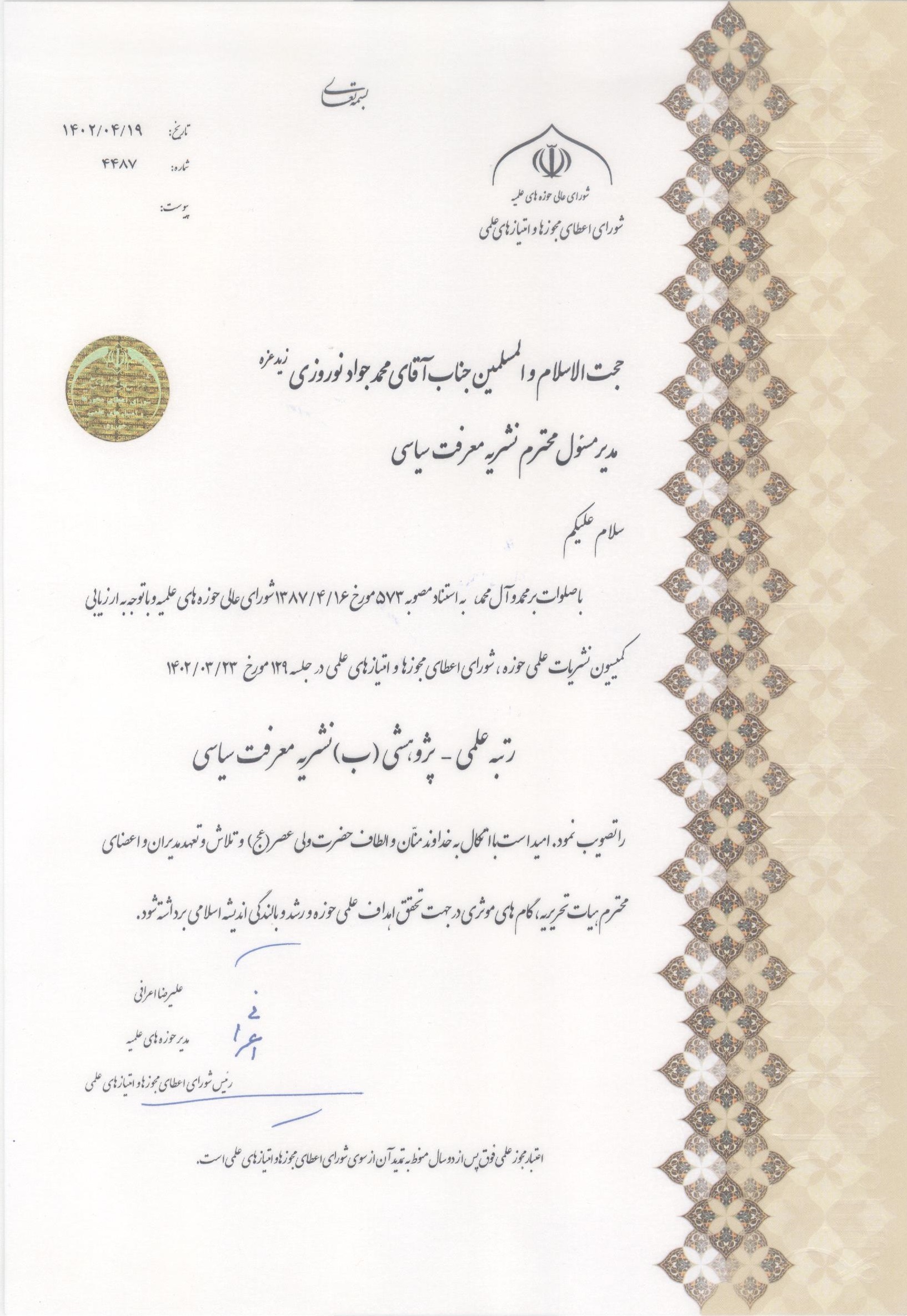

This article will be published in future issues of Ma`rifat-e Siasi.
The Sociological Roots of Religious Symbolism in Iranian Political Culture after the Islamic Revolution
Article Type:
Research
Writers:

Abstract:
The cultural power of any country is the foundation of other sources of power. One of the most important cultural components of the Islamic Revolution of Iran is religious symbolism. The question arises: What are the sociological roots of religious symbolism in the political culture of Iran after the Islamic Revolution? In terms of time frame, it was examined until the death of Imam Khomeini, because the Imam was the founder of the Islamic Revolution. Previous research has considered some aspects, but this research is a new innovation, considering the period after the Islamic Revolution. There are three theories in the book Sociological Theories; written by Ritzer: 1- Functionalist 2- Structuralist 3- Synthesis. According to the third theory, this hypothesis was put forward: Dynamic and motivating symbols such as: Imam Hussein, Ashura, Imam of the Time, Velayat al-Faqih... have played a fundamental role in the development of religious symbolism in Shiite culture and the thoughts of Imam Khomeini (RA). With the analytical descriptive method and qualitative content analysis, religious symbols in Shiite culture were first identified, and these symbols were confirmed by experts using the formal validity method. The intellectual structure of the Imam was analyzed in the Imam's Sahifa. In order to understand the people's trust in the Imam and the clergy, the elections during the Imam's lifetime were also examined; which showed the people's trust in the Imam and the clergy. Therefore, the hypothesis in question was proven.
چکیده و کلیدواژه فارسی (Persian)
Title :ریشه¬های جامعه¬شناختانه نمادگرایی مذهبی در فرهنگسیاسی ایران پس از انقلاب اسلامی
Abstract:
قدرت فرهنگی هر کشوری، زیربنای دیگر منابع قدرت میباشد. یکی از مهمترین مؤلفههای فرهنگی انقلاباسلامی ایران، نمادگرایی مذهبی است. این سؤال مطرح میشود که: ریشههای جامعهشناختانه نمادگرایی مذهبی در فرهنگسیاسی ایران پس از انقلاب اسلامی، کدامند؟ از نظر محدوده زمانی، تا زمان رحلت امام خمینی مورد بررسی قرار گرفت، چون امام بنیانگذار انقلاباسلامی بوده است. تحقیقات پیشین، بعضی از ابعاد را مورد توجه قرار دادهاند، اما این تحقیق، با توجّه به پس از انقلاب اسلامی، نوآوری جدید می باشد. سه نظریه در کتاب نظریههای جامعهشناسی؛ نوشته ریتزر وجود دارد:1-عاملیتگرا 2-ساختارگرا 3-تلفیقی. طبق نظریه سوّم، این فرضیه مطرح شد: نمادهای پویا و محرکّی مثل: امام حسین، عاشورا، امام زمان، ولایت فقیه... در فرهنگ شیعه و تفکّرات امام خمینی(ره)، در جهت گسترش نمادگرایی مذهبی نقش اساسی داشته است. با روش توصیفی تحلیلی و تحلیل محتوای کیفی، ابتدا نمادهای مذهبی در فرهنگ شیعه مشخص شد، و این نمادها به روش اعتبار صوری به تأیید کارشناسان رسید. ساختار فکری امام، در صحیفه امام، تحلیل محتوا شد. برای شناخت اعتماد مردم به امام و روحانیت نیز انتخابات دوران حیات امام بررسی شد؛ که نشان از اعتماد مردم به امام و روحانیت بود. لذا، فرضیه مورد نظر به اثبات رسید.
Cite this article:
RIS
Mendeley
BibTeX
APA
MLA
HARVARD
VANCOUVER
mahdaviankiasari, Ebrahim, Mohseni, Ali, , Mohammad hasan. (2026) The Sociological Roots of Religious Symbolism in Iranian Political Culture after the Islamic Revolution. Ma`rifat-e Siasi, (), -
Ebrahim mahdaviankiasari; Ali Mohseni; Mohammad hasan ."The Sociological Roots of Religious Symbolism in Iranian Political Culture after the Islamic Revolution". Ma`rifat-e Siasi, , , 2026, -
mahdaviankiasari, E, Mohseni, A, , M.(2026) 'The Sociological Roots of Religious Symbolism in Iranian Political Culture after the Islamic Revolution', Ma`rifat-e Siasi, (), pp. -