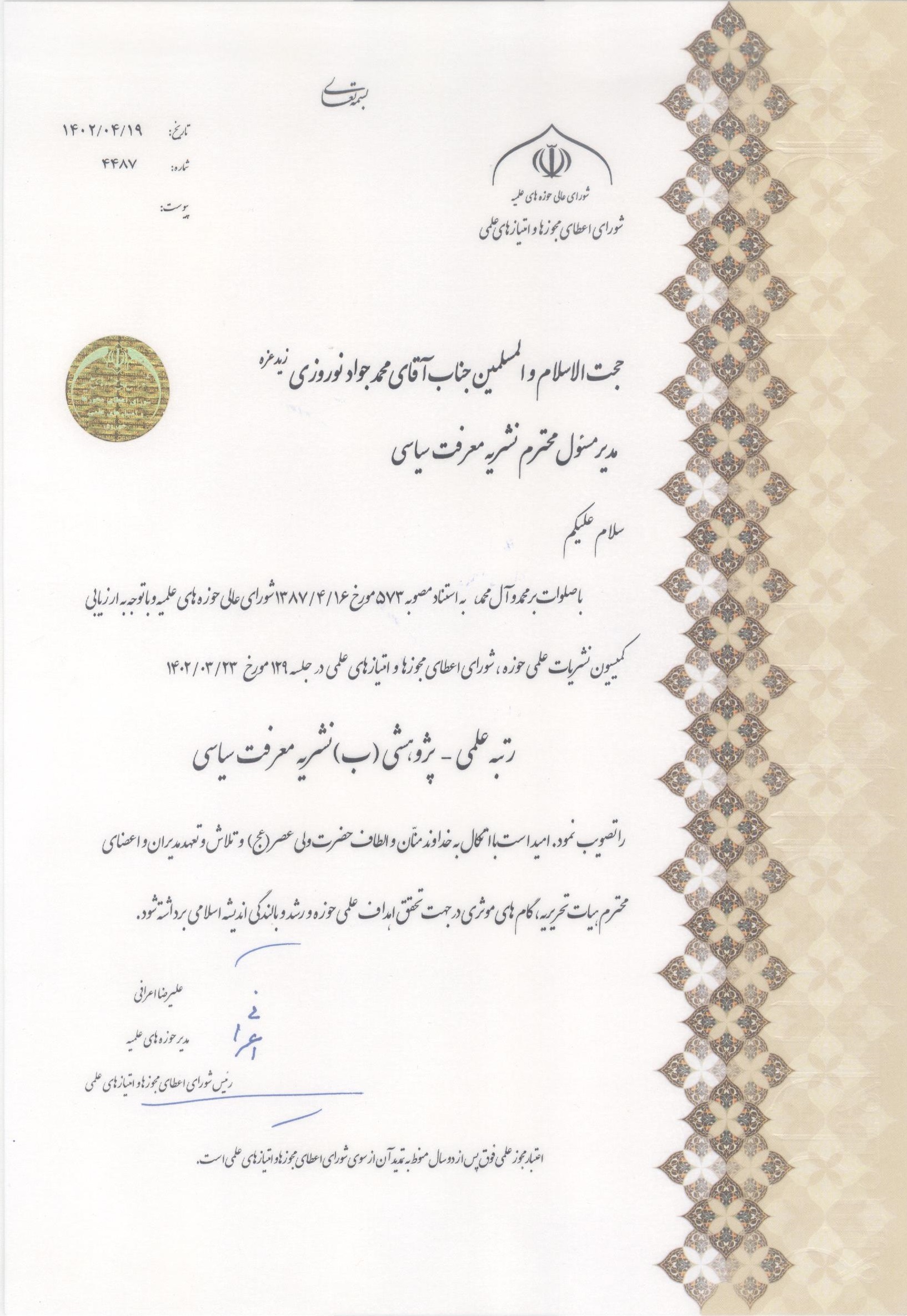
Ma`rifat-e Siasi, Volume 4, Issue 2, No 8, Year 2014, Pages 25-44
An Introduction to the Parameters of Political Justice in the Iranian-Islamic Model for Progress
Article Type:
Research
Writers:
Abstract:
The realization of a steady and inexorable march of progress entails providing a full-scale model based on religious principles. Religious sources consider the question of "justice" as a most important principle. Being one of the most important Islamic principles, the justice, which consists in all political, economic, social and cultural aspects of the intellectual system of Islam, is regarded as a general principle. The political system of Islam regards it as a central principle which must has to play a central role in the constituents of this system. Accordingly, a developed political system cannot be set up unless justice plays a central role in its all constituents. Therefore, the parameters of justice-orientation are those parameters which point out the scale of justice in these structures, and they are evaluated according to the scale of justice and practical commitment to justice in the areas of insight, behavioral action and structural action
چکیده و کلیدواژه فارسی (Persian)
Title :درآمدی بر شاخصهای عدالت سیاسی در الگوی اسلامی ایرانی پیشرفت
Abstract:
تحقق پیشرفت مستمر و پایدار مستلزم ارائه یک الگوی کامل مبتنی بر مبانی دینی است. مهم ترین اصلی که در منابع دینی به آن اشاره شده، بحث عدالت است. عدالت از مهم ترین اصول اسلامی است که در تمام حوزه های سیاسی، اقتصادی، اجتماعی و فرهنگی در نظام فکری اسلام جریان داشته به عنوان یک اصل عام شناخته می شود. در نظام سیاسی اسلام، نیز این اصل به عنوان اصل محوری شناخته شده که لازم است در تمامی اجزاء نظام سیاسی محوریت داشته باشد. بر این اساس دست یابی به یک نظام سیاسی پیشرفته زمانی امکان پذیر است که عدالت در تمام اجزاء آن حضور محوری داشته باشد. بنابراین شاخص های عدالت محوری به معنای شاخص هایی است که نشان دهنده میزان حضور عدالت در این ساختارهاست؛ و ارزیابی آنها بر اساس میزان حضور و التزام عملی به عدالت در حوزه بینش، گرایش، کنش رفتاری و کنش ساختاری می باشد.
References:
- نهجالبلاغه(1379)، ترجمة محمد دشتى، قم، مشهور.
- ارسطو (1385)، اخلاق نيکوماخوس، ترجمة محمدحسن لطفي، تهران، طرح نو.
- بلوم، ويليام تي (1373)، نظريههاي نظام سياسي، ترجمة احمد تدين، تهران، آران.
- پورعزت، علياصغر (1387)، مختصات حکومت حقمدار در پرتو نهجالبلاغه امام علي، تهران، علمي و فرهنگي.
- تميمى آمدى، عبدالواحدبن محمد (1366)، غرر الحكم و درر الكلم، قم، دفتر تبليغات اسلامى.
- جعفري، محمدتقي (1373)، حکمت اصول سياسي اسلام، تهران، بنياد نهجالبلاغه.
- جوادي آملي، عبدالله (1381)، فلسفه حقوق بشر، قم، اسراء.
- حقيقت، صادق، «اصول عدالت سياسي» (1376)، نقد و نظر، ش 10و11، ص 368 – 389.
- خامنهاي، سيدعلي (27/2/1390)، بيانات در دومين نشست انديشههاى راهبردى با موضوع عدالت، www.Leader.ir.
- راغب اصفهانى، حسينبن محمد (1412ق)، المفردات في غريب القرآن، تحقيق صفوان عدنان داود, بيروت، دارالعلم الدار الشامية.
- رالز، جان (1387)، نظرية عدالت، ترجمة سيدمحمدکمال سروريان و مرتضي بحراني، تهران، پژوهشکده مطالعات فرهنگي و اجتماعي.
- سن، آمارتيا (1379)، برابري و آزادي، ترجمة حسن فشارکي، تهران، شيرازه.
- طريحى، فخرالدين (1375)، مجمع البحرين، تحقيق سيداحمد حسيني، تهران، كتابفروشى مرتضوى.
- قرشى، سيدعلىاكبر (1371)، قاموس قرآن، تهران، دارالكتب الاسلاميه.
- لاريجاني، محمدجواد (1377)، تدين، حکومت و توسعه، تهران، مؤسسة فرهنگي انديشه معاصر.
- مجلسي، محمدباقر (1404ق)، مرآة العقول، تصحيح سيدهاشم رسولى، تهران، دارالكتب الاسلاميه.
- مصباح، محمدتقي (1368)، جامعه و تاريخ از ديدگاه قرآن، تهران، سازمان تبليغات اسلامي.
- مطهري، مرتضي (1380)، تعليم و تربيت در اسلام.
- مفيد، محمدبن نعمان (1413ق)، الإرشاد في معرفة حجج الله على العباد، قم، كنگره شيخ مفيد.
- نراقي، احمد (1375)، عوايد الايام، قم، مرکز الابحاث و الدراسات الاسلاميه.
- هنته، بژورن (1381)، تئوري توسعه و سه جهان، ترجمة احمد موثقي، تهران، قومس.
Copyright © 2014 The Author(s). This article is published under the Creative Commons Attribution-NonCommercial 4.0 International License.
Cite this article:
RIS
Mendeley
BibTeX
APA
MLA
HARVARD
VANCOUVER
Karimi, Mohammad Taghi. (2014) An Introduction to the Parameters of Political Justice in the Iranian-Islamic Model for Progress. Ma`rifat-e Siasi, 4(2), 25-44
Mohammad Taghi Karimi."An Introduction to the Parameters of Political Justice in the Iranian-Islamic Model for Progress". Ma`rifat-e Siasi, 4, 2, 2014, 25-44
Karimi, M.(2014) 'An Introduction to the Parameters of Political Justice in the Iranian-Islamic Model for Progress', Ma`rifat-e Siasi, 4(2), pp. 25-44