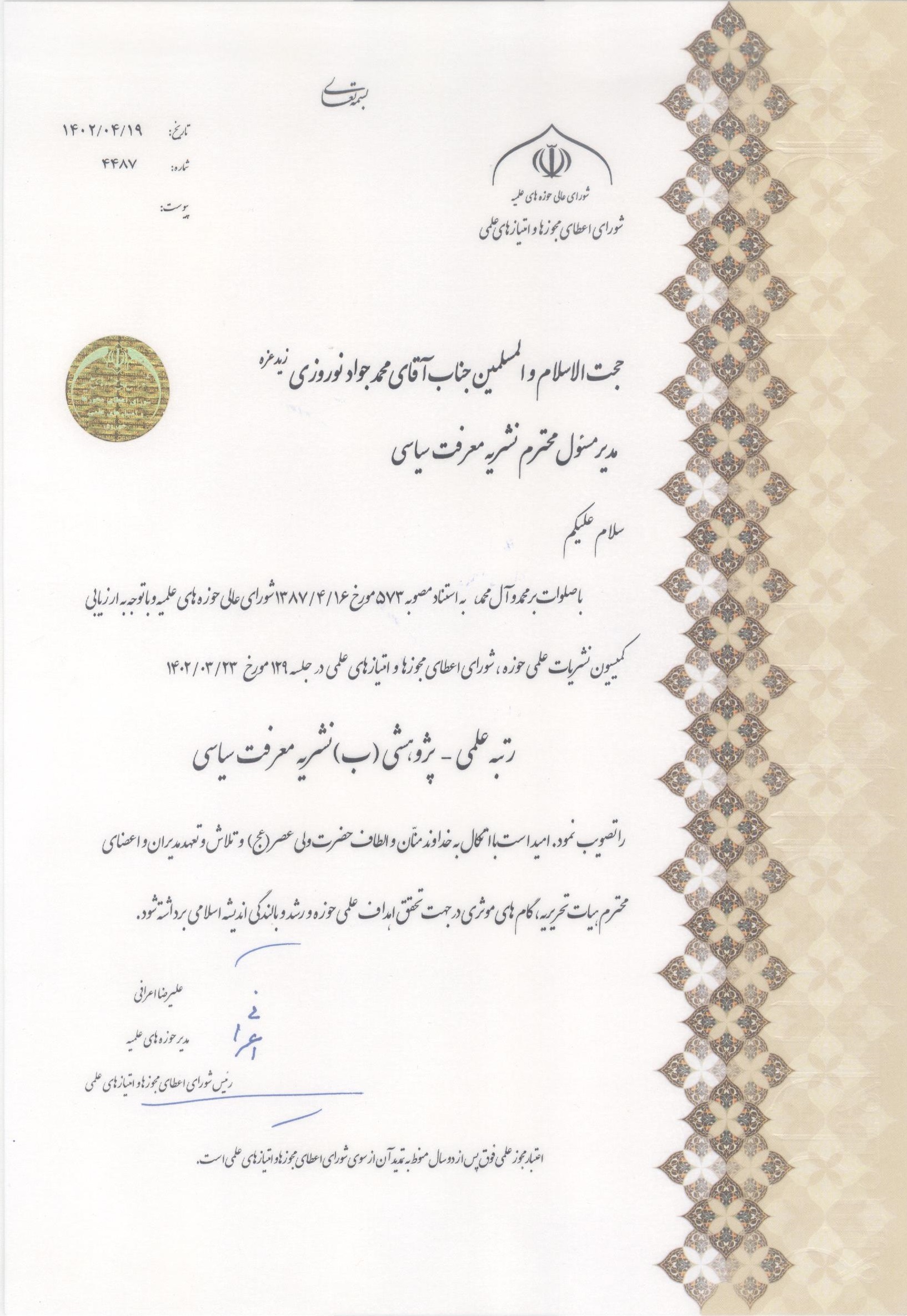
Ma`rifat-e Siasi, Volume 17, Issue 2, No 34, Year 2026, Pages 93-113
The Capacities and Limitations of the Principle of “Possessing innate disposition (fiṭrah)” in the Method of Islamic Humanities (With a Focus on Political Science)
Article Type:
Research
Writers:
✍️ Mohammad Abedi / Assistant Professor, Department of Qur’anic Studies, Islamic Culture and Thought Research Institute, Qom, Iran / Abedi.mehr@yahoo.com
/ Assistant Professor, Department of Qur’anic Studies, Islamic Culture and Thought Research Institute, Qom, Iran / Abedi.mehr@yahoo.com Registering DOI...⏳
Abstract:
Qur’anic anthropology requires accepting that humans possess an innate disposition (fiṭrah)—that is, humans have “specific inherent characteristics” that other beings lack. Given that any anthropological foundation can extend into dimensions of the human sciences (subject, aim, problems, and method), researchers in Islamic humanities, including political science scholars, face the question of whether accepting this anthropological foundation can have methodological implications for the human sciences. This research is based on the assumption that accepting the principle of innate disposition has the capacity to influence the method of the human sciences, including political science, and seeks to demonstrate this influence in three areas. The present study is organized using a descriptive-analytical method and, building on previous research, concludes that: first, holistic methods should be employed in the sciences; second, the methods of the human sciences (in keeping with the innate dimension of human beings) should be a mixed method (based on sources such as revelation alongside “fiṭrah”); and third, since fiṭrah is vulnerable to harm, the presence of a revelatory source is necessary in the method of the human and political sciences.
چکیده و کلیدواژه فارسی (Persian)
Title :ظرفیتها و محدودیت اصل «فطرتمندی» در روش علوم انسانی اسلامی (با نگاهی به دانش سیاست)*
Abstract:
انسانشناسی قرآنی مقتضی پذیرش فطرتمندی انسان بهمعنای برخورداری انسانها از «ویژگیهای ذاتی خاص» است که دیگر موجودات ندارند و از این منظر که هر مبنای انسانشناختی میتواند در ابعادی از دانشهای انسانی (موضوع، هدف، مسائل و روش) امتداد داشته باشد، محققان علوم انسانی اسلامی، از جمله پژوهشگران علم سیاست، با این مسئله مواجهاند که آیا پذیرش این مبنای انسانشناختی میتواند تأثیرات روشی در علوم انسانی داشته باشد. این تحقیق بر این فرض استوار است که پذیرش اصل فطرتمندی ظرفیت تأثیر روشی در علوم انسانی از جمله دانش سیاست را دارد و میکوشد که این تأثیر را در سه عرصه اثبات کند. تحقیق حاضر بهروش توصیفی ـ تحلیلی سامان مییابد و ضمن گذر از نتایج تحقیقات پیشین، دستاوردش این است که باید: اولاً روشهای کلنگر در علوم استفاده شود؛ ثانیاً روشهای علوم انسانی (متناسب با بعد فطری انسانها) روش ترکیبی (مبتنی بر منابعی چون وحی در کنار «فطرت») باشد؛ ثالثاً چون فطرت در معرض آسیب است، حضور منبع وحیانی در روش علوم انسانی و سیاسی ضروری است.
References:
- ابوالحسنی، حسن (1395). حکمت سیاسی متعالیه. تهران: پژوهشگاه فرهنگ و اندیشة اسلامی.
- احمدی، بابک (1370). ساختار و تأویل متن. تهران: نشر مرکز.
- اسدینسب، محمدعلی (1401). مبانی قرآنشناختی علم دینی با تأکید بر علوم انسانی اسلامی. تهران: پژوهشگاه فرهنگ و اندیشة اسلامی.
- اندرو، سایر (1388). روش در علوم اجتماعی، رویکردی رئالیستی. ترجمة عماد افروغ. تهران: پژوهشگاه علوم انسانی و مطالعات فرهنگی.
- راین، آلن (1399). فلسفة علوم اجتماعی. ترجمة عبدالکریم سروش. تهران: صراط.
- بستان، حسین (1384). گامی بهسوی علم دین؛ ساختار علم تجربی و امکان علم دینی. قم: پژوهشگاه حوزه و دانشگاه.
- پارسانیا، حمید (1390). مصاحبه با حمید پارسانیا. مجموعهمصاحبههای همایش تحول در علوم انسانی. قم: فجر ولایت.
- پارسانیا، حمید (1401). جهانهای اجتماعی. تهران: کتاب فردا.
- پالمر، ریچارد (1377). علم هرمنوتیک. ترجمة سعید حنایی کاشانی. تهران: هرمس.
- ترخان، قاسم (1396). ویژگیهای پارادایمی موضوع علوم انسانی اسلامی از نگاه علامه طباطبایی. قبسات، 22(84)، ۲۹ـ۵۲.
- ترخان، قاسم (1398). فطرت و فطریات از نگاه علامه طباطبائی و برایند آن در علوم انسانی. آیین حکمت، 11(40)، 7ـ30.
- ترخان، قاسم (1400). عقل شناخت. تهران: انتشارات بینالملل.
- ترخان، قاسم (1402). برآیند مبانی کلامی در علوم انسانی اسلامی. تهران: پژوهشگاه فرهنگ و اندیشة اسلامی.
- جعفری، علیاصغر (1383). مبانی معرفتشناختی فطرت. خردنامة صدرا، 10(38)، 57ـ86.
- جعفری، محمدتقی (1380). ترجمه و تفسیر نهج البلاغه. مشهد: آستان قدس رضوی، بنیاد پژوهشهای اسلامى.
- جوادی آملی، عبدالله (1379). تفسیر موضوعی. قم: اسراء.
- حقیقت، سیدصادق (1394). روششناسی علوم سیاسی. قم: دانشگاه مفید.
- رهبری، مهدی (1385). هرمنوتیک و سیاست؛ مروری بر نتایج سیاسی هرمنوتیک فلسفی هانس گئورگ گادامر. تهران: کویر.
- ریختهگران، محمدرضا (1378). منطق و مبحث علم هرمنوتیک. تهران: کنگره.
- زمخشری، محمودبنعمر (1407ق). الکشاف عن حقائق غوامض التنزیل و عیون الأقاویل فی وجوه التأویل. لبنان: دار الکتاب العربی.
- سبحانی، جعفر (1375). مدخل مسائل جدید در علم کلام. قم: مؤسسة امام صادق(ع).
- سروش، عبدالکریم (1393). تفرج صنع. تهران: صراط.
- شاکرین، حمیدرضا و همکاران (1399). مبانی الگوی پایة اسلامی ایرانی پیشرفت. تهران: پژوهشگاه فرهنگ و اندیشة اسلامی.
- شاهآبادی، محمدعلی (1386). رشحات البحار؛ الانسان و الفطره. تهران: پژوهشگاه فرهنگ و اندیشة اسلامی.
- شریفی، احمدحسین (1397). مبانی علوم انسانی اسلامی. تهران: آفتاب توسعه.
- صدرالمتألهین، محمدبنابراهیم شیرازی (1382). الشواهد الربوبیه. تهران: بنیاد حکمت اسلامی صدرا.
- صدرالمتألهین، محمدبنابراهیم شیرازی (1409ق). الحکمة المتعالیة فی الاسفار الاربعة. قم: مصطفوی.
- طباطبایی، سیدمحمدحسین (1377). اصول فلسفه و روش رئالیسم. تهران: صدرا.
- طباطبایی، سیدمحمدحسین (1417ق). المیزان فی تفسیر القرآن. قم: دفتر انتشارات اسلامی جامعة مدرسین حوزة علمیة قم.
- عابدی، محمد (1394). استلزامهای مبانی خداشناختی در ساحت سیاست از منظر علامه طباطبایی. معرفت سیاسی، 7(2)، 63ـ86.
- عابدی، محمد (1396). مبانی فلسفة علمی تفسیر سیاسی. معرفت سیاسی، 9(18)، 5ـ28.
- عابدی، محمد (1404). نقد پارادایمهای علوم انسانی بر مبنای فطرتمندی انسان در قرآن (با تأکید بر دانش سیاست). ذهن، 26(102)، ص59ـ80.
- عبدلی مسینان، مرضیه و خسروپناه، عبدالحسین (1398). بررسی مبانی انسانشناختی علوم انسانی غربی و اقتضائات روششناختی آن. مطالعات معرفتی در دانشگاه اسلامی، 23(2)، 291ـ314.
- علیتبار، رمضان (1401). فراروش، منطق علوم انسانی اسلامی. تهران: پژوهشگاه فرهنگ و اندیشة اسلامی.
- علیتبار، رمضان (1403). هویت علوم انسانی اسلامی (معیارها و مؤلفهها). تهران: پژوهشگاه فرهنگ و اندیشة اسلامی.
- فروند، ژولین (1388). نظریههای مربوط به علوم انسانی. ترجمة محمدعلی کاردان. تهران: مرکز نشر دانشگاهی.
- محمدپور، احمد (1402). روش در روش؛ دربارة ساحت معرفت در علوم انسانی. تهران: لوگوس.
- مطهری، مرتضی (1375). مجموعه آثار. قم: صدرا.
- مکارم شیرازی، ناصر (1371). تفسیر نمونه. تهران: دار الکتب الاسلامیه.
- موسوی خمینی، سیدروحالله (1386). صحیفة امام. تهران: مؤسسة تنظیم و نشر آثار امام خمینی(ره).
- مهاجرنیا، محسن (1400). بحران روششناختی در کلام سیاسی با تأکید بر دیدگاه آیتالله خامنهای. معرفت سیاسی، 13(1)، 59ـ74.
- واعظی، احمد (1380). درآمدی بر هرمنوتیک. تهران: پژوهشگاه فرهنگ و اندیشة اسلامی.
Copyright © 2026 The Author(s). This article is published under the Creative Commons Attribution-NonCommercial 4.0 International License.
Cite this article:
RIS
Mendeley
BibTeX
APA
MLA
HARVARD
VANCOUVER
Abedi, Mohammad. (2026) The Capacities and Limitations of the Principle of “Possessing innate disposition (fiṭrah)” in the Method of Islamic Humanities (With a Focus on Political Science). Ma`rifat-e Siasi, 17(2), 93-113 https://doi.org/10.22034/siyasi.2025.5002797.
Mohammad Abedi."The Capacities and Limitations of the Principle of “Possessing innate disposition (fiṭrah)” in the Method of Islamic Humanities (With a Focus on Political Science)". Ma`rifat-e Siasi, 17, 2, 2026, 93-113
Abedi, M.(2026) 'The Capacities and Limitations of the Principle of “Possessing innate disposition (fiṭrah)” in the Method of Islamic Humanities (With a Focus on Political Science)', Ma`rifat-e Siasi, 17(2), pp. 93-113